Tuesday, May 26, 2009

Starbucks,..What Where You Thinking?


Starbucks Cup
Starbucks Cup
I've never understood why a company drops a popular product. With all the social networking sites, blogs, and feedback, it seems nearly impossible for "The Who from WhoVille" to go unheard. In this case, it's like holding a billion megaphones to a companies ear and everyone yelling at the same time. Maybe that's the problem, maybe we made them go deaf.

Specifically the focus of this particular frustration is Starbucks. People are actually leaving feedback on Starbucks own idea Web site, http://mystarbucksidea.force.com, and Starbucks appears very slow to respond...if they respond at all.

First, there's the Pike Place blend in the afternoon. Literally thousands of people have visited Starbucks Idea page asking them to add a variety of afternoon blends, and still no change.

Next, a lot of people have asked Starbucks to bring back the Almond syrup, so many I got tired of counting, right there on Starbucks Idea page, and still no almond syrup.

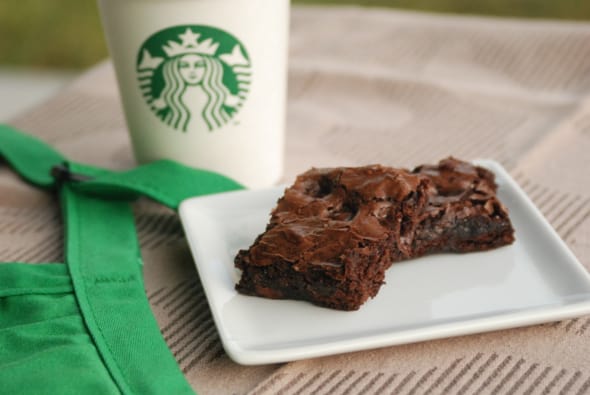
Starbucks Espresso Brownie
Lastly, and this one is the most personal, Please Bring Back The Espresso Brownie...Please. O.k., to date there were only four comments on the Starbucks Idea page, and one of them was mine, and this is probably one of the most unhealthy desserts on earth, but once in a while I just need one. I love them!

So, Starbucks, when you get the chance, please offer different blends in the afternoon, bring back the almond syrup and the beautiful, wonderful, tasty espresso brownie.


Saturday, May 16, 2009

Decompression & Theoretical Tissue Compartments

TurtlePhoto by Erika Antoniazzo - Decorated by Me

Today I had an opportunity to teach a handful of PADI divemaster candidates Decompression Theory and the eRDPML. I thought I would share a little information about theoretical tissue compartments and calculating tissue pressure.

Background Information

n the early 1900's the British Navy found it too expensive to train scuba divers only to have them retire early because they were experiencing the bends frequently. In 1905 they contracted Dr. John Scott Haldane to research the causes and possible methods of preventing decompression sickness (DCS). After experimenting on goats, Haldane concluded that when descending, nitrogen pressure in compressed air is higher than in a divers body, so body tissue absorbs dissolved nitrogen and eventually body tissue will saturate and absorb no additional nitrogen. Once a divers begins to ascend, the nitrogen in the body tissue is higher than the surrounding pressure and the body tissue releases the nitrogen. Pressure gradient is the difference between the dissolved nitrogen pressure and the surrounding pressure. If a divers ascends correctly, the body can handle the gradient pressure without DCS, however, if the gradient pressure exceeds acceptable limits, bubbles form and cause DCS. Haldane completed his experiments in 1906 and published his theoretical model and no-decompression tables in 1908. Today, virtually all dive tables and dive computers calculate their no decompression limits based on his theoretical decompression model.

Tissue Compartments, Halftimes, & M-Values

Haldane built his theoretical model based on the fact that different parts of the body absorb and release dissolved nitrogen at different rates, therefore his model is based on multiple theoretical tissue compartments. His original model included five tissue compartments, today's versions have 14 or more compartments. Each theoretical compartment has a halftime which represents the time in minutes it takes to absorb and release nitrogen and is expressed in meters/feet sea water (msw/fsw). Each compartment takes six halftimes to fully saturate or empty. Original Haldane models ranged from 5 to 75 minutes. Today's models range from 3 to more than 600 minutes. In the 1960's, Dr. Robert Workman reviewed Haldane's model and revised it noting that each tissue compartment could tolerate different levels of over-pressurization and was depth dependent. His revision introduced the M-value which describes the amount of over-pressurization each compartment could tolerate at any depth.

Calculating Tissue Pressure

Ok, now we get to the problem or the problems. The problem is that students sometimes have trouble with this part of the lesson. They have trouble understanding how to calculate tissue pressure. Here are a couple of examples that break the calculations down into their simplest terms.

QUESTION: A 5 minute halftime compartment will have how much tissue pressure 5 minutes after its taken from the surface to 90 feet in seawater?

SOLUTION:

HALFTIMES MINUTES DEPTH TISSUE PRESSURE
1 5 90.00 fsw ÷ 2 = 45.00 fsw 45.00 fsw

- After 5 minutes, a 5 minute compartment will saturate 1 halftime.
- 1 halftime is 1/2 the total depth: 90.00 ÷ 2 = 45.00

QUESTION: A 5 minute halftime compartment will have how much tissue pressure 20 minutes after its taken from the surface to 90 feet in seawater?

SOLUTION:

HALFTIMES MINUTES DEPTH TISSUE PRESSURE
1 5 90.00 fsw ÷ 2 = 45.00 fsw 45.00 fsw
2 10 45.00 fsw ÷ 2 = 22.50 fsw 45.00 fsw + 22.50 fsw = 67.50 fsw
3 15 22.50 fsw ÷ 2 = 11.25 fsw 67.50 fsw + 11.25 fsw = 78.75 fsw
4 20 11.25 fsw ÷ 2 = 5.63 fsw 78.75 fsw + 5.63 fsw = 84.38 fsw


QUESTION: A 5 minute halftime compartment will have how much tissue pressure 40 minutes after its taken from the surface to 90 feet in seawater?

SOLUTION:

HALFTIMES MINUTES DEPTH TISSUE PRESSURE
1 5 90.00 fsw ÷ 2 = 45.00 fsw 45.00 fsw
2 10 45.00 fsw ÷ 2 = 22.50 fsw 45.00 fsw + 22.50 fsw = 67.50 fsw
3 15 22.50 fsw ÷ 2 = 11.25 fsw 67.50 fsw + 11.25 fsw = 78.75 fsw
4 20 11.25 fsw ÷ 2 = 5.63 fsw 78.75 fsw + 5.63 fsw = 84.38 fsw
5 25 5.63 fsw ÷ 2 = 2.81 fsw 84.38 fsw + 2.81 fsw = 87.19 fsw
6 30 2.81 fsw ÷ 2 = 1.41 fsw 87.19 fsw + 1.41 fsw = 88.59 fsw


Since each compartment takes six halftimes to fully saturate or empty, after 30 minutes, a 5 minute compartment is fully saturated. Therefore, after 40 minutes, the compartment is still fully saturated at 88.59 fsw.

QUESTION: How long would it take a 20 minute compartment to saturate to a given depth?

SOLUTION: 20 minutes per halftime * 6 halftimes = 120 minutes

Well, I hope this helps anyone out there trying to understand Theoretical Tissue Compartments, Halftimes, & M-Values. I love working these problems. If you would like to see these same problems worked in metric or you have a different problem, feel free to contact me with a question. I'll post the question and solution.


Saturday, May 9, 2009

Star Trek On The IMAX Screen

Blog Contains No Spoilers


Sit down, turn off your cell phones [people who know me will tell you I NEVER do this], hold on, and prepare for an incredible ride. The point of an IMAX screen is to fill your field of vision giving you a feeling of immersion, and with this movie, there is non-stop motion. From the moment the lights dim in the theater, this movie experience puts you right in the middle of the action.

From the casting to the acting, this movie was done right. Writers, directors, and producers balanced the original stories, character background stories, the future, and current activities, and they did this exceptionally well. I never felt lost except maybe when...oops, that would be a spoiler.

Looking for a spectacular cinematic adventure...you've found it. Want believable special effects...it's in this movie. Need something old and something new...it's here. Put it all together and project it onto an IMAX screen, and you get the best motion picture of the year!

As a final note, I woke my teen daughter up and asked her to get ready to go to the movies. She asked what we would be seeing. When I told her it was Star Trek, she rolled her eyes and exhaled the word "oh" so strongly, the temperature in the room changed and the curtains bristled. When the movie ended, she called some of her best friends before we reached the car and told them "you just have to see this movie."


Thursday, May 7, 2009

So You Want To Dive Sipadan


Palau Sipadan
Palau Sipadan
Pulau Sipadan lies just off the northeast coast of Borneo in Malaysia. It's the only oceanic island in Malaysia. Living corals grew on top of an extinct volcanic cone to form the island. In 1989, Jacques Yves Cousteau was so taken by the diving on this island he filmed his documentary 'Ghosts of the Sea Turtle' there. To me, Sipadan is a paradise I hope to return to...very soon.


GETTING THERE

Getting to Pulau Sipadan is quite an adventure. If you're flying in from Kuala Lumpur, you can fly directly to the Tawau [Tu Wow] airport; lucky dog. From anywhere else in the world, you'll need to fly into Kota Kinabalu airport. From Kota Kinabalu airport, catch a connection to the Tawau airport. The next step involves catching a bus or a van to Semporna which takes about 1 hour. From Semporna, you'll catch a private boat to your dive resort which takes about another hour.

WHERE TO STAY

Sipadan was once the center of a territorial dispute between Malaysia and Indonesia. On April 23, 2000, A Filipino terrorist group, Abu Sayyaf, kidnapped 21 people from a resort on the island. Eventually, all 21 victims were released. In 2002 the International Court of Justice awarded the island to Malaysia. In 2004, in an effort to conserve a balanced ecosystem on and around the island, the Malaysian government ordered all on-site resort operators to move their structures off of the island. The Malaysian military now protects the island and surrounding areas against terrorist attacks. So, since staying on Sipidan isn't an option, you'll have to stay at one of the neighboring resorts.

Sipadan Kapalai Dive Resort
There are several options including three resorts on the neighboring island of Mabul, and the Sipadan Kapalai Dive Resort. Each of these resorts is a short boat ride to Sipadan, and each resort offers endless opportunities to shore dive, but the Sipadan Kapalai Dive Report is a magical location. If you sit quietly on it's helicopter pad, the only thing you'll hear is the sound of the breeze and the gently lapping water. This resort sits on sturdy stilts on the shallow sandbanks of the Ligitan Reefs, so there's plenty of diving all around the resort. "Planned and built in full style as an airy, comfortable, sunny water village with no land in sight, it boasts a mile-long sandbank of powdery white sand where one can suntan at complete leisure while gazing out to the miles of brilliant turquoise stretching into the horizon offering the purest image of natural serenity."

SIPADAN DIVING

Bumphead Wrasse
Bumphead Wrasse
Sipadan is peppered with dive sites all the way around, and each dive is unique. Before diving here, I was afraid of being in the water with sharks. On our very first dive we dropped down on an incredible wall dive. There were other divers below us and I lost my dive buddy amongst all the bubbles. Keeping my eyes open and scanning the area for my husband, I moved closer to our divemaster, and when we reached our maximum depth, there was a shelf where there were at least four large shark. My heart was racing and I was momentarily paralyzed. Then I noticed the sharks moving away from photographers. Every time someone approached a shark, it moved away. That was the beginning of the end of my fear of sharks. On one of our dives we were surrounded by a swirl of so many barracuda they blotted out the sun. During another dive, we lost track of the number of white tip sharks and turtle. "Normally rare diving scenes are frequently seen in the waters around Sipadan." We saw schools of bumphead wrasse, green and hawksbill turtles, gigantic schools of big-eye jacks that will swirl around you taking you to a diver's heaven. You end almost every dive atop a shallow reef with cleaning stations, tabletop coral, eel, shrimp, cowry, nudibranchs, flatworms, and tons and tons of fish.

A NOTE OF CAUTION

If you want to dive here plan ahead, travel with a dive center, and make as many arrangements as you can ahead of time. The rules for diving at Sipadan change daily. Sometimes they let five boats approach the island, sometimes four, sometimes none. A boat of divers may be allowed to do one, two, or three dives before leaving the island. The best way to be sure you'll get to dive Sipadan is to stay at one of the resorts for at least a week. That's why we stayed at the Sipadan Kapalai Dive Resort, the diving around the resort made waiting for Sipadan worth it, and the diving at Sipadan is worth the wait!


What Are You Waiting For?

In 1997 while visiting my brother at his home in Florida, I noticed a mask, fins, and snorkel propped against
a strange black back-pack with colorful looping tentacles draped over it standing in the corner.
Buoyancy Compensation Device
When I asked him about the gear he told me he had learned to scuba dive in trade for a roof replacement job. He invited me to get certified so we could go diving together. I immediately declined and continued to decline the offer for over a year before moving back to Washington. I declined for two reasons; at the time I believed only professionals like Jacques Cousteau were scuba divers, and in general my brother lived his life recklessly. The thought of being underwater with him made me nervous. Now, over ten years later, I’m diving in the beautiful cold water of the Pacific Northwest and warm water all over the world.

In 2005, my husband, Steve, and I had booked a vacation package on a cruise out of Florida. After discovering we had been roped into a scam vacation package, we decided to cut our losses and bail on the vacation. With time off already approved by our employers, we scrambled to put together a new vacation plan. Steve mentioned he had always wanted to visit Belizé to do some snorkeling so we put together a trip that would take us into three distinct areas of Belizé and bought the Lonely Planet Dive and Snorkel Belizé book. It didn’t take much reading to discover we would be missing out on some incredible experiences if we limited ourselves to snorkeling, so we decided to get scuba certified. In fact, we noticed some of the best diving was deeper than 60 feet so we backed our class up to allow us enough time to get certified as advanced divers. The vacation far exceeded our expectations. Each reef we visited was covered with a rainbow of colorful life with an interstate of bi-directional traffic at rush hour in the form of fish, eel, rays, and turtles. The simplicity of each dive left us free to soak in every view and creature leaving us with some terrific memories.

What Are You Waiting For Sign
When we returned home we immediately thumbed through our dive magazines looking for our next dive destination. We both agreed that Bonaire and Curaçao were at the top of our wish list, but they seemed so exotic we didn’t think we could get there anytime soon. Then we met the owners of TL Sea Diving in Des Moines, Washington. They told us about an upcoming trip to Bonaire and without hesitation we signed up. Since then we’ve traveled with them to Nanaimo, Canada for some fantastic wreck diving, Bonaire, Netherlands for some breath-taking boat and shore diving, Cozumel, Mexico for some exciting drift diving, and Malaysia and Indonesia where the diving is nothing short of breathtakingly incredible. scuba diver We’re so enthusiastic about exploring underwater worlds with our new friends that we’ve signed up for several of their upcoming trips to both local and warm water destinations.

The thought of scuba diving began with feelings of trepidation and I considered it an unattainable dream. Today I’m living that dream. I lost my brother in 2005 and regret not getting certified earlier to dive with him. Now he accompanies me as my secondary buddy on every dive. What are you waiting for?


Friday, May 1, 2009

White Balance Your Underwater Photos


These are photos from a recent trip to Indonesia. The point of this slideshow is to demonstrate that it's easier to "color correct" photos that start out good. The value of taking an underwater photo using white balance cannot be over emphasized. All of these photos, with the exception of the four with shadows, were taken with a Canon PowerShot A640 and an Ikelite housing with no lighting or stobe. Color is managed completely using white balance. The four fish with shadows were taken on a night dive with no white balance or stobe...I cheated and used my husbands video lighting...hey it was a cute fish and I left my strobe at home.
Beautiful Slug
Beautiful Slug
PhotoBucket Slideshow